Pediatric Occupational Therapy
Helping Children Build the Skills They Need to Thrive
Occupational therapy (OT) helps children develop the skills they need to participate more successfully in the activities that make up their everyday lives. For children, these “occupations” include playing, learning, getting dressed, eating, writing, interacting with others, participating in school, and becoming increasingly independent.
At Growing in Motion, our pediatric occupational therapists look beyond a single skill or behavior. We consider the whole child—including motor skills, sensory processing, attention, regulation, communication, relationships, and emotional development—to understand what may be making everyday activities difficult. We consider the physical needs and emotional needs of the child in order to help them be the most successful.
Our goal is not simply to help a child complete a therapy activity. Our goal is to help children use their skills in the real world.
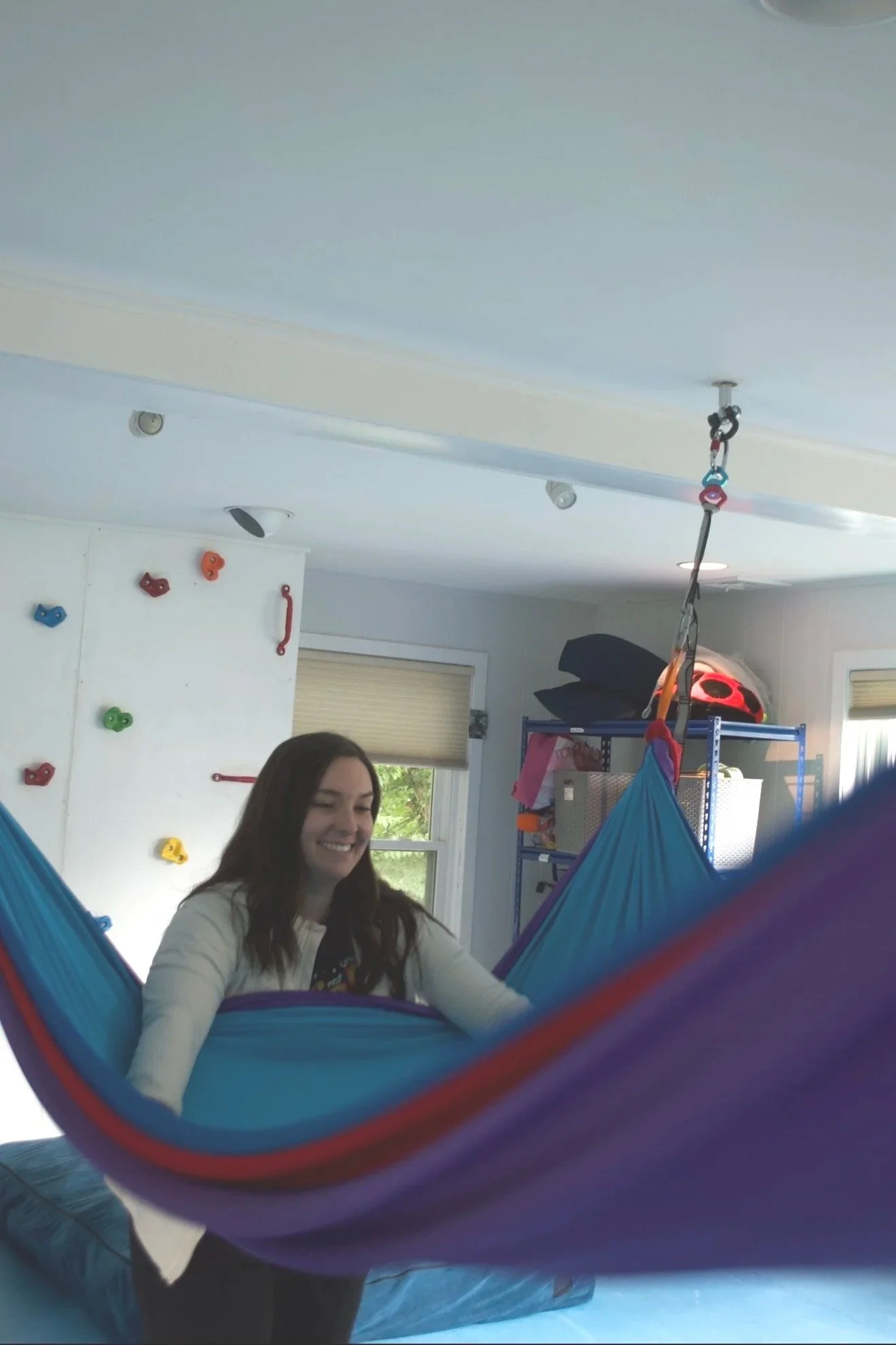
Could Occupational Therapy Help My Child?
Parents often seek occupational therapy when they notice that everyday activities seem harder for their child than they should be.
Your child may benefit from an OT evaluation if they:
Struggle with handwriting or using a pencil
Have difficulty getting dressed or managing buttons/zippers
Avoid certain foods or have significant feeding difficulties
Become overwhelmed by sounds, clothing, movement, or other sensory experiences
Seem constantly “on the go”
Have difficulty sitting and participating in classroom activities
Struggle with coordination or learning new physical skills
Have difficulty planning or completing multi-step activities
Become frustrated by tasks involving fine motor skills
Have difficulty transitioning between activities
Struggle with age-appropriate independence
What Does Pediatric Occupational Therapy Address?
Every child is different, and occupational therapy is different for each child. We create INDIVIDUAL goals, plans, and treatment based on the child’s strengths, interests, and needs.
-
Pencil grasp, handwriting, cutting, coloring, manipulating small objects, hand strength and coordination.
-
Understanding and responding appropriately to sensory information including movement, touch, sound, visual input, and body awareness.
-
Dressing, shoes, buttons, zippers, utensils, grooming and other daily routines.
-
Learning new movements, navigating playground equipment, coordinating both sides of the body and completing multi-step activities.
-
Food exploration, sensory challenges, oral-motor skills, mealtime participation and food selectivity.
-
Help the child to take in their environment and maintain a calm, alert state throughout the day
-
Developing flexible play, pretend play, problem-solving, interaction with peers
OT can help with:
Pediatric OTs are Secret Detectives!

With children, we see function. We see their performance and their behavior. The job of a pediatric OT is to ask “why?” We investigate to try to figure out if there are any underlying issues that we need to address to help the child! Click below to see what an OT might be thinking about when we hear some common issues
-
An OT may be curious about the following when we hear this:
How is the core? Is the child able to maintain a seated posture for long durations?
Is the child looking for movement? Can we provide this to them?
Are they under-reactive to vestibular input or seeking this input?
Are they under-reactive to touch and proprioceptive input?
Are there visual distractions and can we limit them?
Does the child need more consistent check-ins from their caregivers?
-
An OT may be curious about the following when we hear this:
Is the core strong?
Are the shoulders strong?
What does the grip look like?
Are there primitive reflexes present?
How is attention?
Is the child motivated with the task?
-
An OT may be curious about the following when we hear this:
How is the tactile system?
Is the child hyper-reactive to touch and are they reacting in a defensive manner?
Does the child feel as if the world is attacking them in some way?
How can we setup positive interactions for the child?
Is the child misunderstanding the intent of others?
-
An OT may be curious about the following when we hear this:
What are the child’s social-emotional capacities?
How are the sensory systems doing and how are they impacting the child?
What are the child’s interests and how can we incorporate them in therapy?
-
An OT may be curious about the following when we hear this:
What are the 5 foods?
What are the common basic characteristics of the foods?
Are there oral motor issues?
How are the sensory systems?
What do mealtimes look like?
How does the child look while seated in a chair for meals?
How many fluids is the child taking in each day?
Are there allergies or digestive issues?
-
An OT may be curious about the following when we hear this:
The tactile system. Is the child hyperactive to light touch?
Is the child sensitive to the low frequency sounds of the bathtub water?
Are there vestibular sensitivies the child has when their head is tipped back in the bath?
How can we adapt these activities so the child is more successful?
-
An OT may be curious about the following when we hear this:
What strategies has the family tried to help with this?
How are the child’s communication skills?
Does the child understand the expectations for them?
How are transitions communicated to the child?
What particular transitions are difficult?
3 Important Ingredients to our OT Therapy. Let’s Cook Up a Good Session!
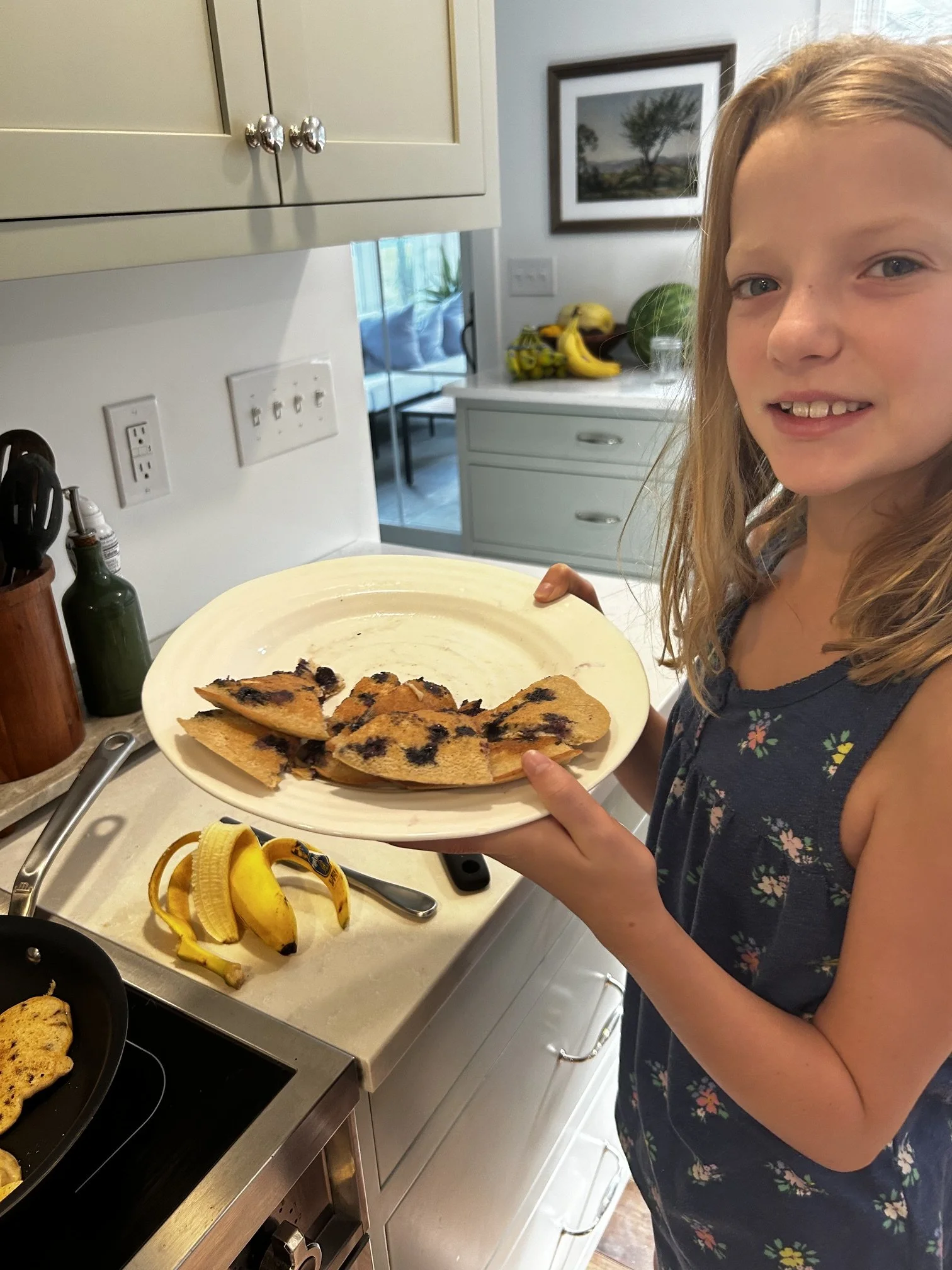
1) Sensory-Based Play
Play is one of the most powerful tools we use in pediatric occupational therapy.
Children are naturally motivated to play, explore, move, and interact with their environment. When therapy activities are enjoyable and meaningful, children are more likely to stay engaged, practice new skills, and try challenging activities again and again.
That repeated practice matters because the brain is constantly adapting and learning. Neuroplasticity refers to the brain's ability to change and strengthen connections as we learn and practice new skills. When a child is actively engaged in an activity that is challenging, meaningful, and appropriately matched to their abilities, therapy can create more opportunities for learning and skill development.
Play also gives us a natural way to work on underlying skills without making therapy feel like work. A child may be climbing, swinging, building, drawing, or navigating an obstacle course, while at the same time developing balance, coordination, motor planning, strength, attention, or sensory processing skills.
Another important part of pediatric OT is helping children achieve a regulated state—a state in which they are calm, alert, attentive, and ready to interact and learn.
Every child responds to sensory information differently. Some children may seek lots of movement and physical input, while others may become overwhelmed by sounds, touch, movement, or busy environments. Our occupational therapists consider each child's individual sensory needs and may incorporate movement, heavy work, tactile activities, calming strategies, and other sensory experiences into therapy. The goal is not simply to provide sensory input, but to help each child find strategies that support their ability to participate in everyday activities.
We also work with families to identify practical strategies that can be used at home, at school, and in the community. When children are better able to regulate and participate, everyday routines can become more successful and less stressful for the entire family.
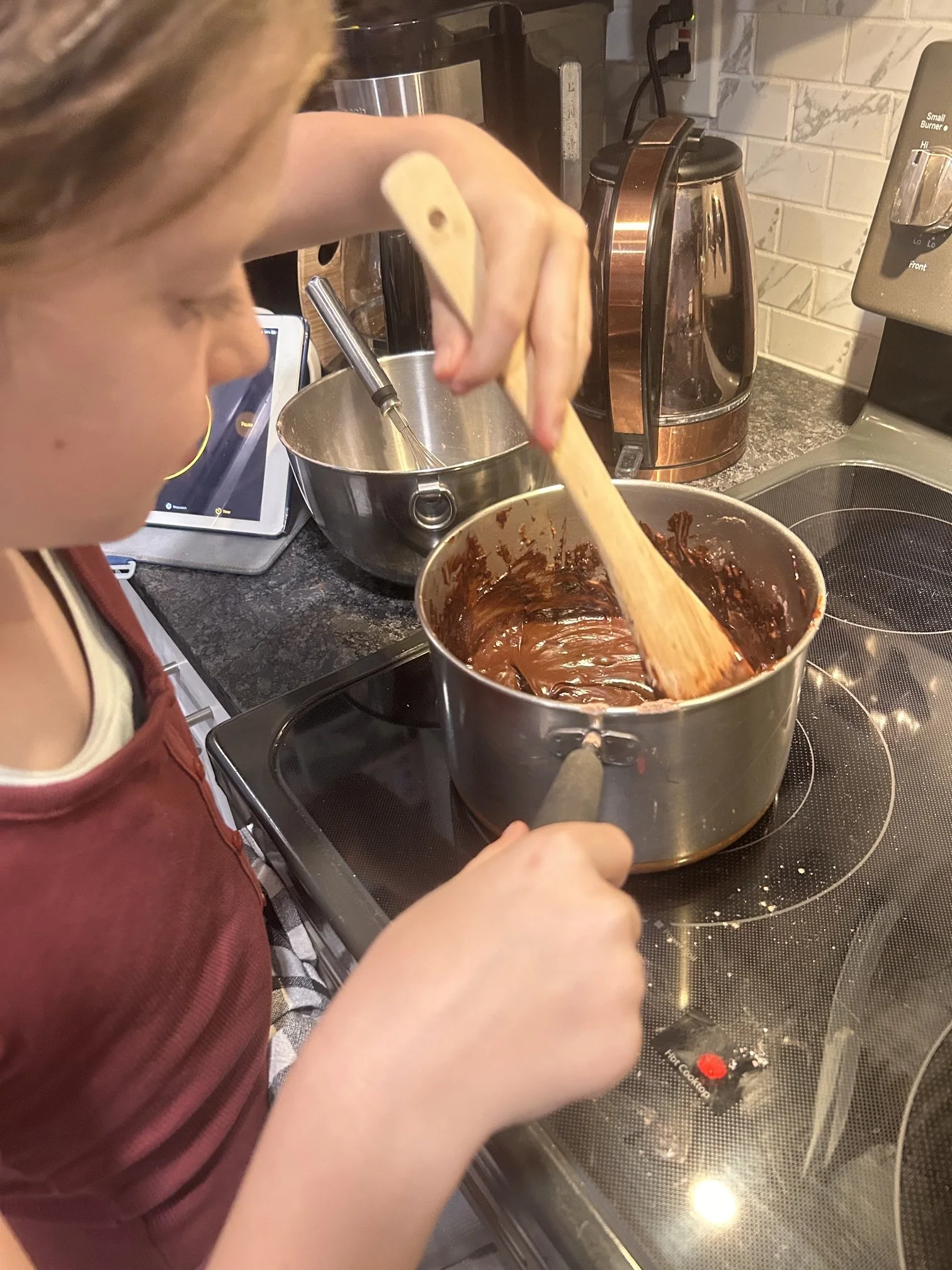
2) Relationships
Strong relationships are one of the most important ingredients in successful therapy.
Children learn best when they feel safe, understood, and connected to the people working with them. Our therapists take the time to build trusting relationships with each child while also partnering closely with parents and caregivers.
We incorporate the D.I.R./Floortime® approach, which emphasizes meeting each child at their individual developmental and social-emotional level. We often begin by following the child's interests and lead, then gradually build more interaction, communication, flexibility, and reciprocity as the relationship develops.
Parents and caregivers are an essential part of this process. We listen to their concerns, share what we are seeing during evaluations and therapy sessions, and work together to develop practical strategies that can be used at home and at school. As a child's needs change, we adjust our approach together

3) Find that “Just Right Challenge”
Therapy should be challenging—but not overwhelming.
Every child has different abilities, and those abilities can even change from day to day. Our therapists carefully observe each child to determine what they are ready to work on and then find the “just right challenge”: an activity that is challenging enough to promote growth while still allowing the child to experience success.
We consider the child's regulation, sensory needs, strengths, interests, and current abilities when choosing activities. When children feel successful and engaged, they are often more willing to try something new and push themselves a little further.
Over time, these small successes can build skills, confidence, motivation, and independence.