Pediatric Speech Therapy
Helping Children Communicate, Connect, and Be Understood
Communication is about so much more than saying words. It’s how children share their ideas, express their feelings, build relationships, and make sense of the world around them.
At Growing in Motion, our speech-language therapists help children develop meaningful communication skills through individualized, play-based therapy. We meet children where they are developmentally, build on their strengths and interests, and create opportunities to learn through connection, interaction, and fun.
Whether your child is learning to communicate their first words, developing longer sentences, improving speech clarity, or building social communication skills, we help them take the next steps toward communicating with confidence.
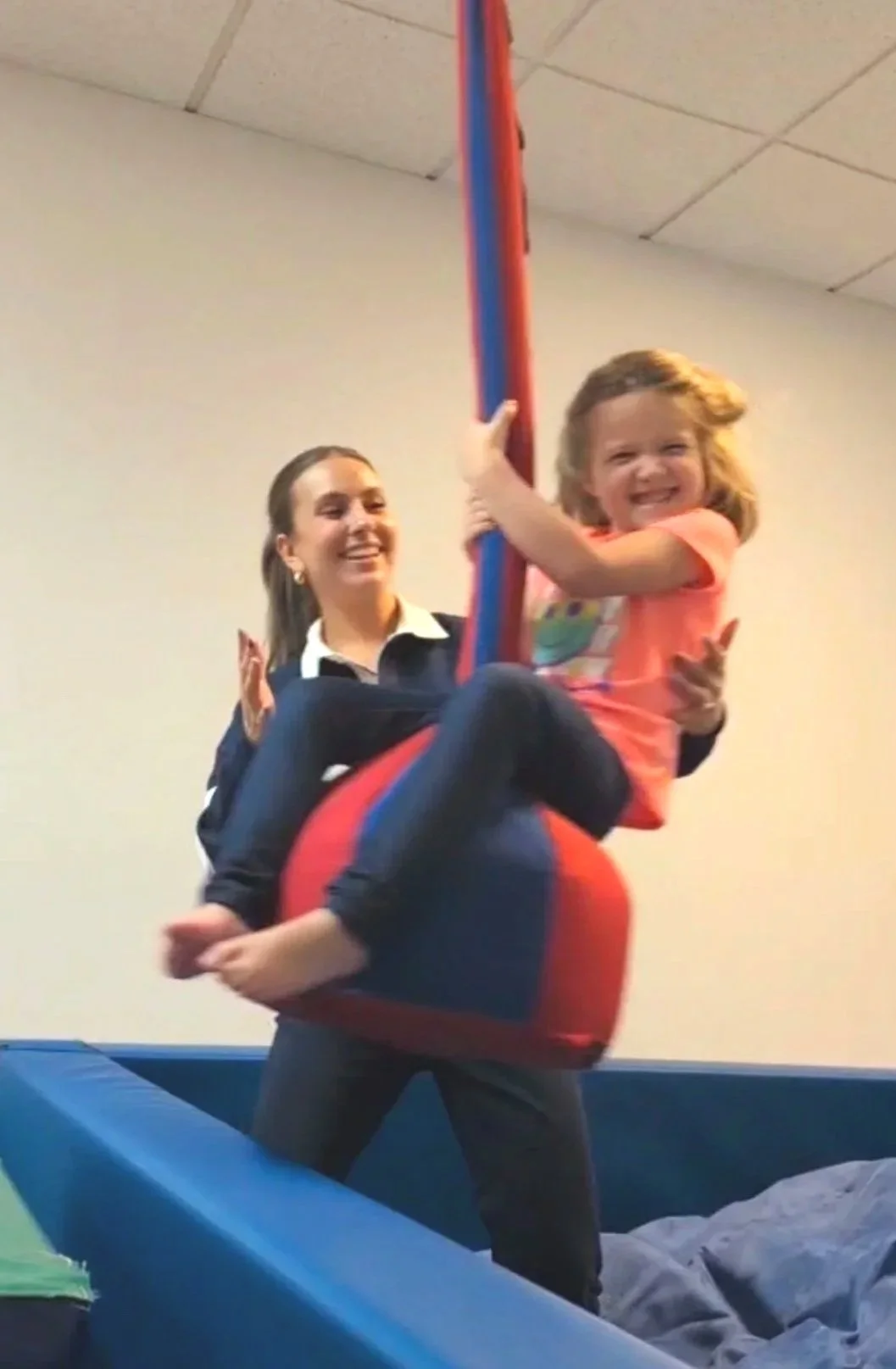
The DIR Approach to Language Development
Parents often want their child to talk more. We want that too! Our developmental approach makes sure that children have foundational skills necessary to be effective communicators. Using the DIR/Floortime model, we build on foundational pieces necessary to get to expressive language
-
First, we need to connect.
Engagement is a child's ability to stay connected and involved with another person. It might look like making eye contact, sharing a smile, joining an activity, noticing what another person is doing, or staying connected during play.
We use activities that are genuinely interesting and motivating to the child to build these connections.
A child who is engaged is more available for communication.
Connection comes before conversation.
-
Communication starts when a child realizes, "I can make something happen."
Intentional communication doesn't always involve words. A child might look toward a favorite toy, reach for something, point, gesture, make a sound, or pull a parent toward what they want.
We want children to discover that their actions have an impact on other people.
When a child points toward a swing and looks at their parent, and the parent responds by pushing the swing, the child learns:
“You understood me. I communicated something to you.”
Those early moments of intentional communication become the building blocks for more sophisticated communication later.
-
Communication becomes more powerful when we can share an experience with someone else.
This is more than simply requesting something. It's about having something to share.
A child might notice a dog and look at their parent. The parent responds, "Look at that big dog!" Now they are sharing the same experience.
Over time, children learn to share interests, emotions, thoughts, pretend ideas, and experiences with another person.
Maybe you're building a tower together and it falls down.
“Oh no!”
Maybe your child sees a fire truck and wants you to notice it too.
“Look!”
These shared experiences help children understand that communication isn't just about getting something they want. It's a way to connect with another person and share their world.
-
Before children can consistently express ideas, they need to understand them.
Comprehension involves much more than knowing individual words. Children gradually learn to understand gestures, facial expressions, routines, questions, directions, emotions, and the meaning behind what other people say.
We build comprehension naturally through play and everyday interactions.
“Where's the car?”
“Put the baby in the bed.”
“Uh-oh! The tower fell down!”
“Let's find the red one.”
As children understand more about the world and the people around them, they have more information and ideas to communicate.
-
Now we're ready to help children express those ideas.
Production is where we see children begin using sounds, gestures, words, phrases, sentences, and other forms of communication to express themselves.
For some children, that may mean developing spoken language. For others, it may include gestures, signs, pictures, AAC, or a combination of communication methods.
Our goal isn't simply to get a child to say more words.
We want children to be able to communicate what they want, what they need, what they think, what they feel, and what they find interesting.
Because the most meaningful words are the ones that have a reason behind them.
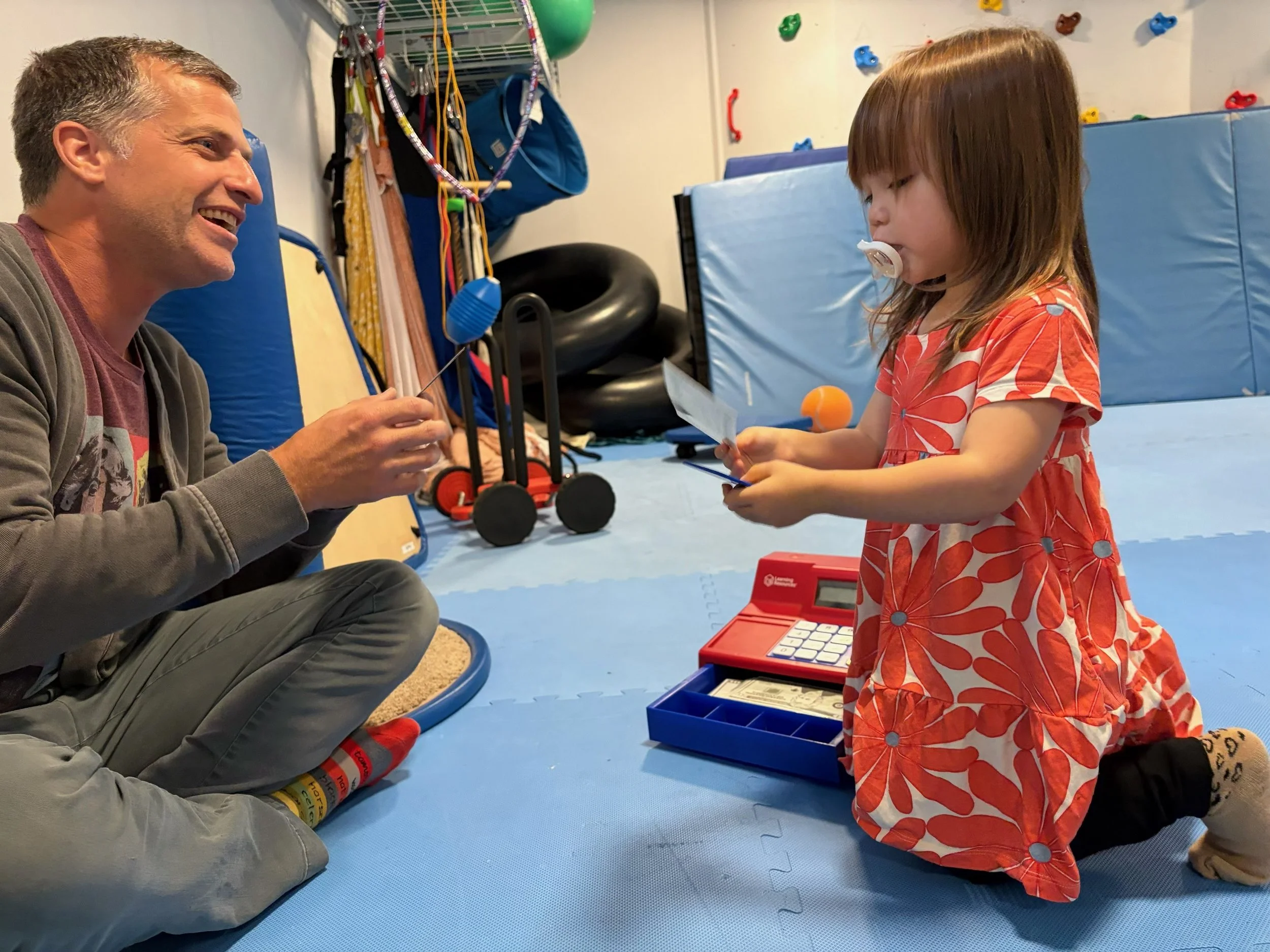
Communication Grows Through Connection
We use the DIR/Floortime® approach to support the developmental foundations of communication. Children learn best when they feel connected, engaged, and motivated to interact with the people around them.
Rather than focusing only on words, we look at the skills that help communication grow. These foundations build on one another as children learn to connect, share experiences, understand language, and express their thoughts.
How Speech Therapy Can Help
Every child has a unique communication profile. Our speech-language therapists develop individualized goals based on each child's strengths, needs, and everyday experiences.
Speech therapy at Growing in Motion may address:
Expressive language: Helping children communicate their wants, needs, feelings, and ideas using words, sentences, or other communication methods.
Receptive language: Supporting children's understanding of words, directions, questions, and language.
Articulation and speech sounds: Helping children learn to produce sounds more clearly so others can understand them.
Childhood apraxia of speech: Supporting children who have difficulty planning and coordinating the movements needed for speech.
Social communication: Building skills for back-and-forth interactions, shared attention, conversation, and connecting with others.
Augmentative and alternative communication (AAC): Exploring tools such as picture boards, communication books, and speech-generating devices when helpful.
Fluency: Supporting children who experience stuttering or other disruptions in the flow of speech.
Our approach considers the whole child, recognizing that communication develops through relationships, meaningful experiences, and opportunities to participate in everyday life.
Every Form of Communication Matters

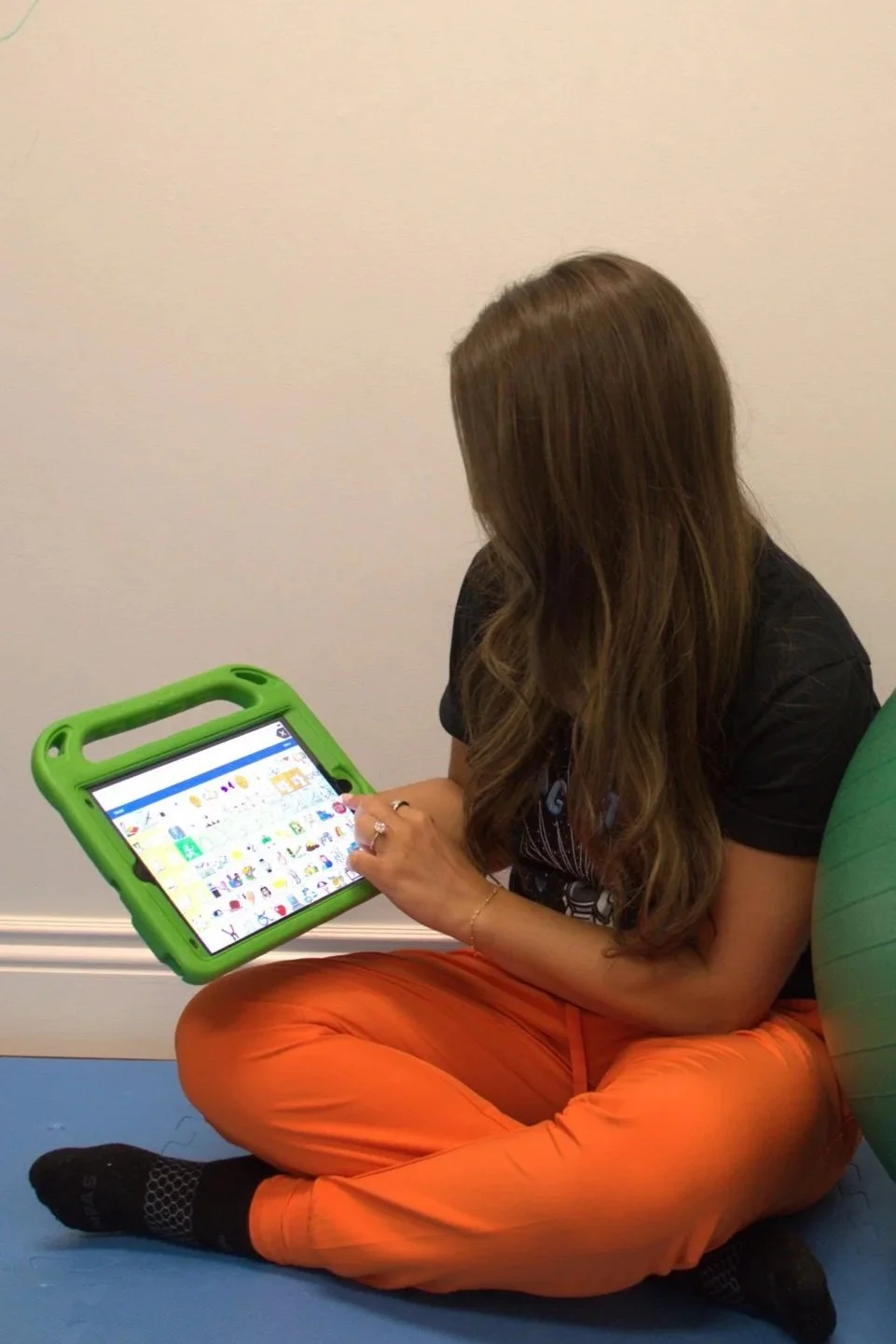
Communication looks different for every child. It may include spoken words, gestures, facial expressions, signs, pictures, or speech-generating devices. We believe every child has something to say, and every form of communication deserves to be recognized and supported.
Our speech-language therapists build on each child's strengths to help them express their wants, needs, feelings, and ideas. By supporting meaningful communication, we help children reduce frustration, build independence, and connect with others.
Our goal isn't simply to help children find their words. It's to help every child find their voice.
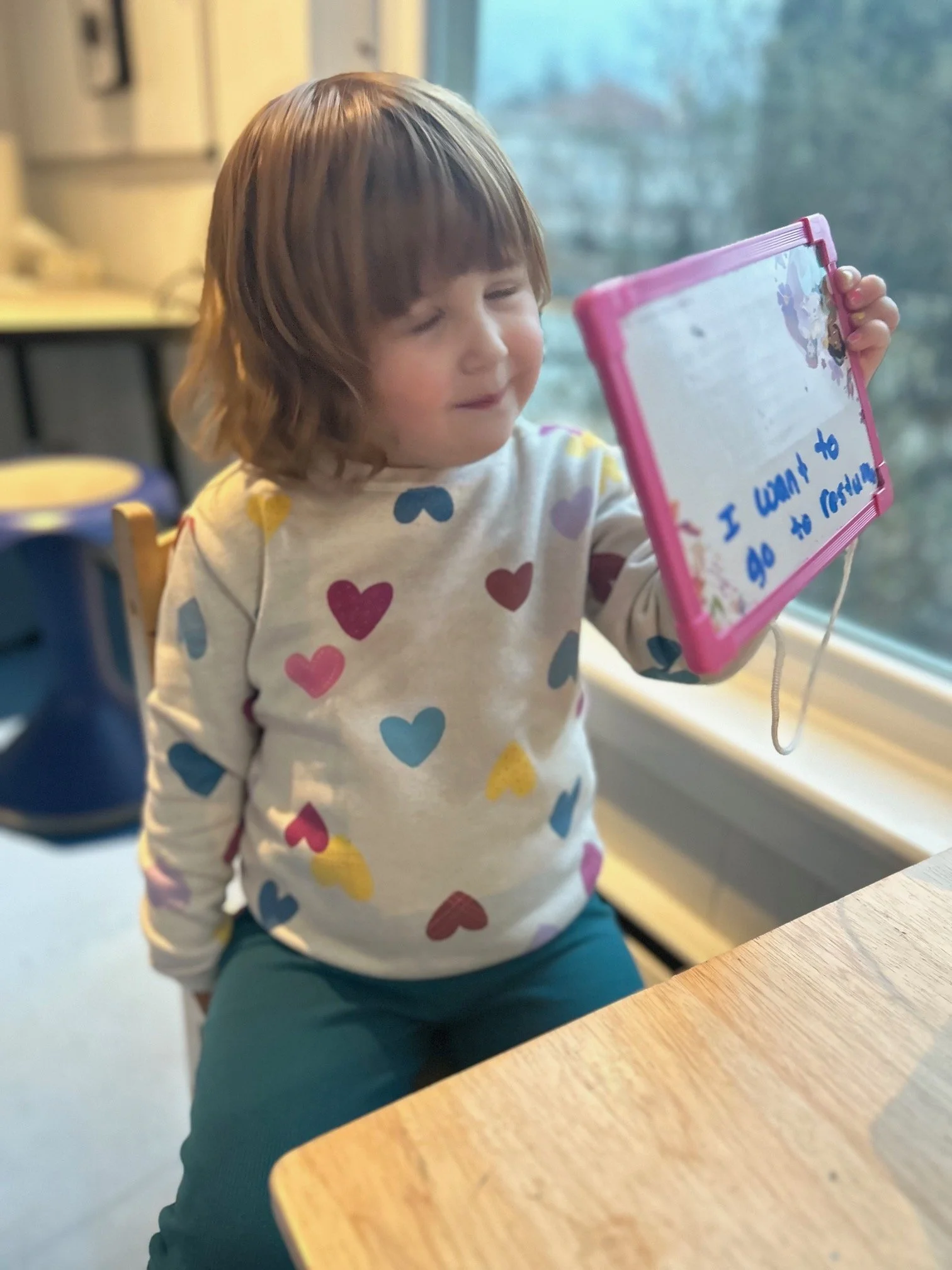
Speech and Language Developmental Milestones
-
Makes sounds, coos, giggles, and begins babbling.
Responds to familiar voices and sounds.
Begins recognizing familiar words and people.
Uses gestures such as reaching, pointing, and waving.
Enjoys back-and-forth interactions with caregivers.
-
Understands familiar words and simple directions.
Uses words to communicate wants and needs.
Begins combining two words, such as “more milk” or “go outside.”
Points to familiar objects or body parts when named.
Uses gestures, sounds, and words to connect with others.
-
Combines words into short phrases and sentences.
Begins asking simple questions.
Understands and follows two-step directions.
Names familiar people, objects, and actions.
Begins participating in simple conversations.
-
Uses longer sentences to share thoughts and experiences.
Answers simple questions about stories or everyday events.
Tells you about something that happened during the day.
Understands more complex directions and concepts.
Is generally understood by familiar and unfamiliar listeners.
-
Uses longer, more detailed sentences.
Tells simple stories and describes events.
Answers questions about stories and experiences.
Understands and follows directions during activities and games.
Participates in conversations and communicates ideas more clearly.
More detailed descriptions of developmental milestones are listed on the American Speech and Hearing Association’s (ASHA) website: ASHA's Developmental Milestones: Birth to 5 Years
Articulation Speech Therapy: Helping Children Speak Clearly
Speech sounds help children share their ideas and be understood by others. When a child has difficulty producing certain sounds, our speech-language therapists use individualized, play-based activities to help them learn how to say sounds more clearly and confidently.
We break speech sounds into manageable steps, helping children learn where to place their tongue, how to move their lips, and how to coordinate airflow. Through practice, feedback, and fun activities, children work toward using their new skills in words, sentences, and everyday conversations.
How about that pesky “R” sound???
The /r/ sound can be one of the trickiest sounds for children to master. It requires precise tongue positioning and coordination, and there isn't just one way to produce it correctly.
Our speech-language therapists help children discover the tongue placement and movements that work best for them. We start by teaching the sound in a way the child can understand, then gradually practice it in words, phrases, sentences, and conversation.
With individualized cues, visual supports, and motivating activities, we help children build the skills and confidence to use their /r/ sound more consistently in everyday speech. Our goal is not just to practice a sound in therapy, but to help children carry that skill into real-life communication.

Tips for Parents
Model, don’t pressure- Speak clearly and slowly, but don’t force your child to repeat.
Celebrate attempts – Praise effort, not just perfect words.
Use multiple communication methods – Encourage gestures, signs, or pictures alongside speech.
Read together daily – Books help reinforce sounds, rhythm, and vocabulary.
Practice in short bursts – Keep speech practice playful and frequent rather than long and demanding.Our speech-language therapists build on each child's strengths to help them express their wants, needs, feelings, and ideas. By supporting meaningful communication, we help children reduce frustration, build independence, and connect with others.
Families Are Part of the Team
Communication happens everywhere—not just in the therapy room. We work with parents and caregivers to understand their child's strengths, challenges, and everyday routines.
We share practical strategies families can use during play, mealtimes, reading, and daily activities to support communication beyond therapy sessions.
Wondering If Your Child Could Benefit From Speech Therapy?
Children develop communication skills at different rates, and it can be difficult to know when to seek support. If your child has difficulty understanding language, expressing ideas, producing speech sounds, or connecting with others, a speech-language evaluation can help you understand their needs and explore next steps.