Pediatric Physical Therapy
Helping Children Build Strength, Confidence, and Movement Skills
Movement is how children explore their world. From learning to crawl and walk to climbing playground equipment, navigating stairs, and keeping up with friends, motor skills help children participate in everyday life.
At Growing in Motion, our pediatric physical therapists help children develop the strength, balance, coordination, flexibility, and motor control they need to move with greater confidence and independence. We look beyond the movement itself to understand what may be making a skill difficult, then create an individualized treatment plan that builds on each child's strengths and developmental needs.
Through playful, purposeful activities, we help children build the foundations for movement, participation, and growth.
What Does Pediatric Physical Therapy Address?
Therapy That Moves Beyond Exercise
Children don't learn movement skills by doing repetitive exercises alone.
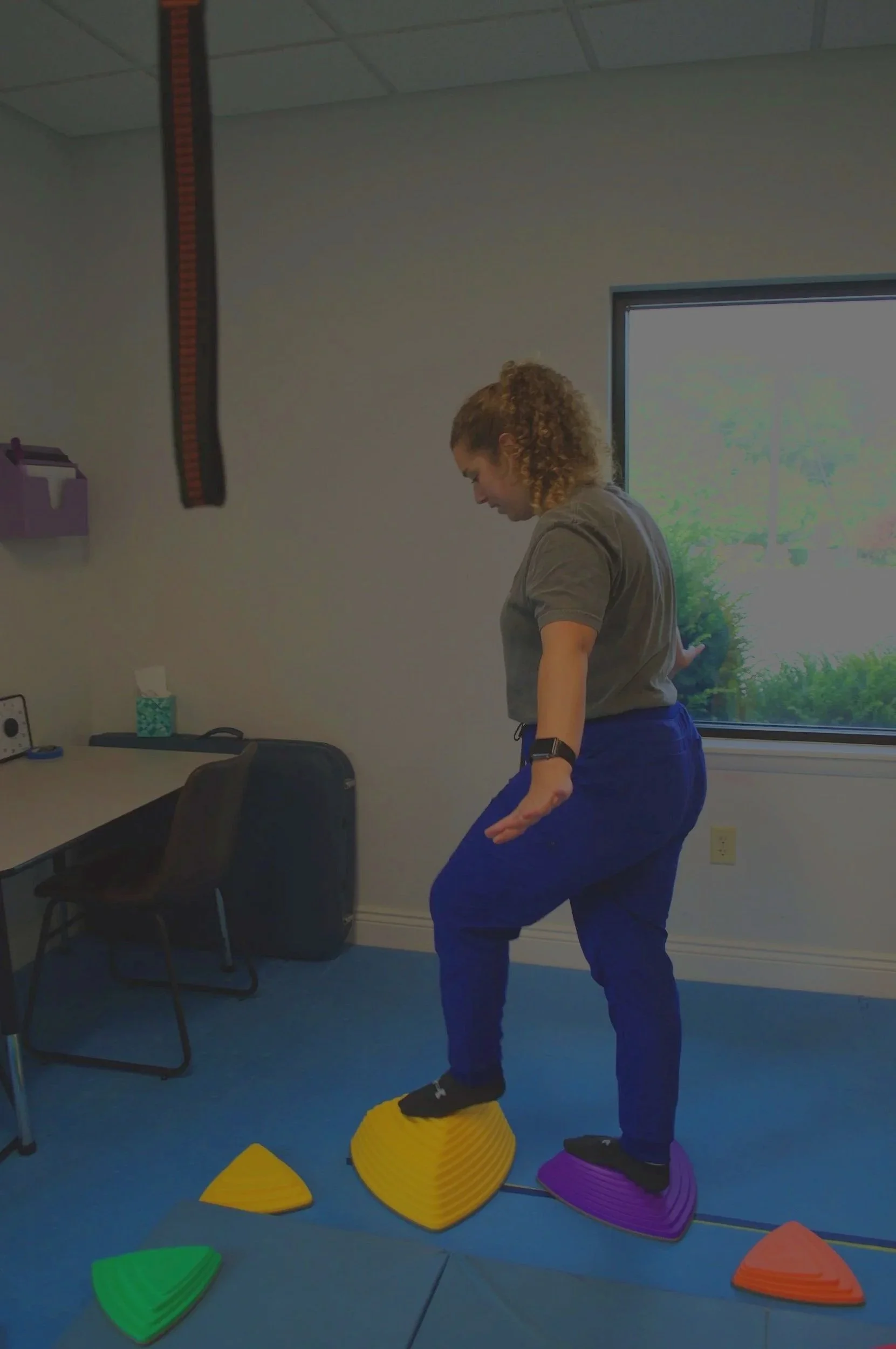
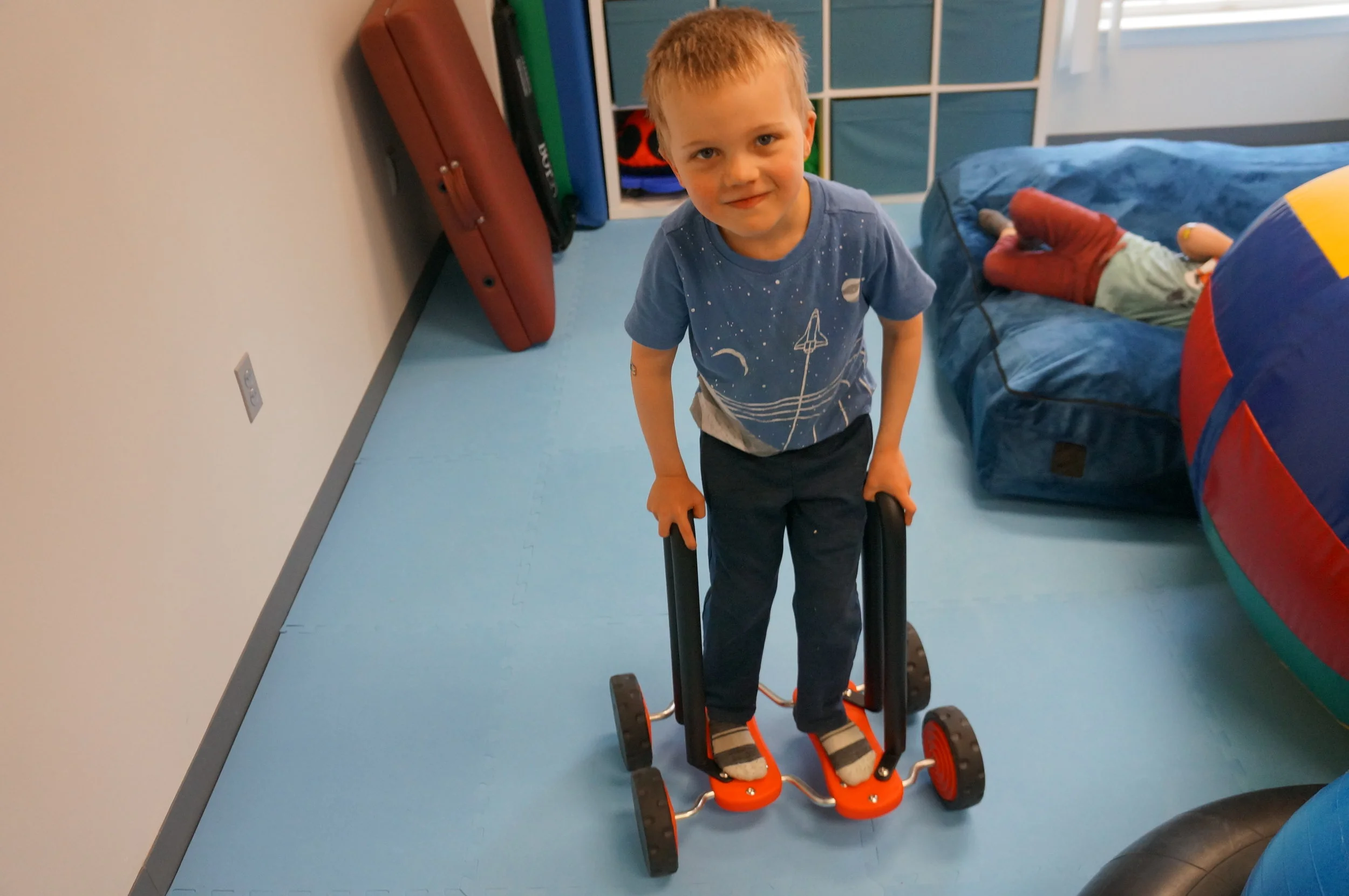
Our pediatric physical therapy sessions incorporate movement and play to help children develop new skills in meaningful ways. An obstacle course might build balance and coordination. Climbing and crawling activities might strengthen muscles and improve body awareness. Games that involve jumping, reaching, or navigating different surfaces can help children practice the movements they use every day.
We tailor activities to each child's abilities and goals, providing the right level of challenge while helping them experience success.
Physical therapy helps children develop the movement skills needed for everyday activities, play, and participation with their families and peers.
Your child may benefit from physical therapy if they:
Are delayed in reaching gross motor milestones, such as rolling, sitting, crawling, standing, or walking
Have difficulty with balance, coordination, or motor planning
Walk on their toes or have an unusual walking pattern
Have muscle weakness, tightness, or limited range of motion
Have high or low muscle tone
Struggle with stairs, jumping, running, climbing, or other age-appropriate activities
Have difficulty keeping up with peers during playground activities or active play
Need support with mobility, positioning, or specialized equipment
Every child develops differently. An evaluation helps us understand your child's movement abilities, identify areas that may benefit from support, and determine appropriate goals.
Work the Core!
〰️
Work the Core! 〰️
Building a Strong Foundation for Movement
Physical therapists are movement experts. Our team of physical therapists work closely with families to address concerns and achieve the individualized functional mobility goals for each child. Difficulties with movement may be due to factors such as weakness, range of motion or flexibility deficits, or balance and coordination challenges. Our physical therapists work on getting to the root of the issue. The phrase “proximal stability leads to distal mobility” discusses the importance of this. Whether there is poor shoulder stability impacting handwriting, an imbalance between extensor muscles and flexor muscles impacting sitting posture and attention, or weak hamstrings impacting independence going down stairs, our evaluation and treatment is geared towards determining and addressing the underlying issues.
-
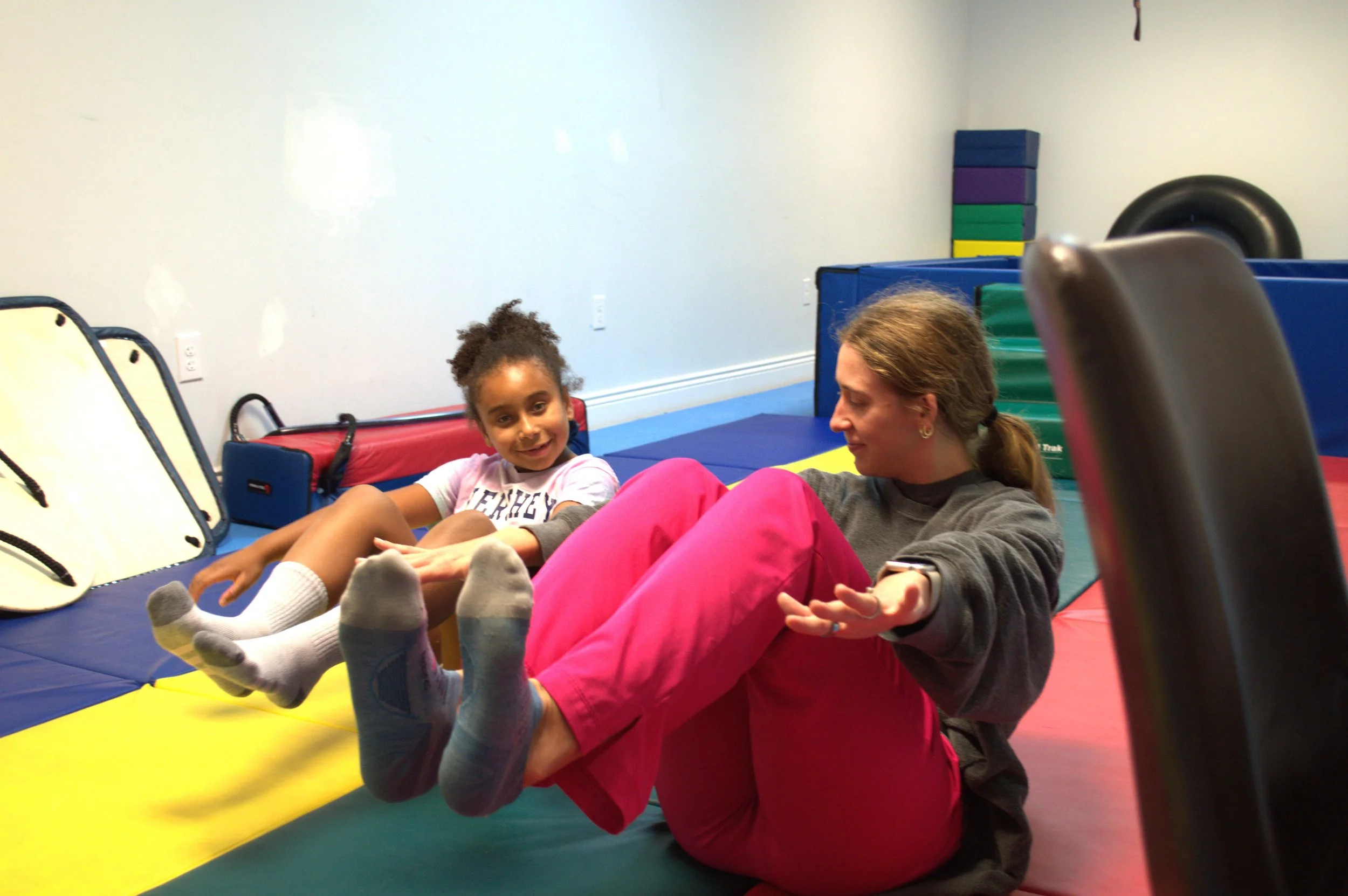
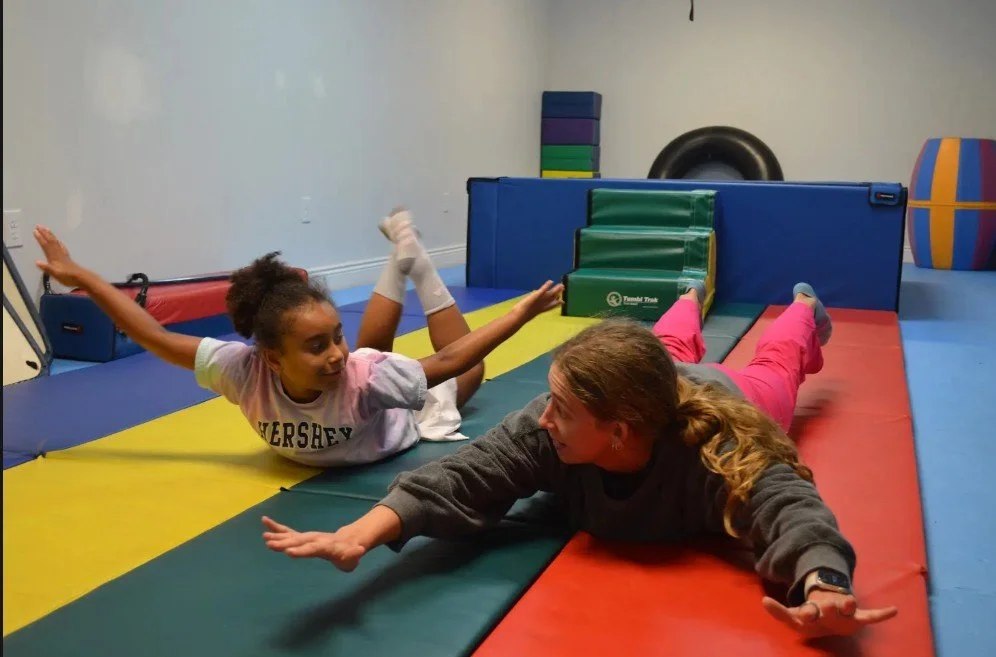
Children need a stable foundation to control their bodies and perform coordinated movements. We work on strength and postural stability to support skills such as sitting, standing, climbing, reaching, and navigating everyday environments.
-
Balance and coordination help children move safely and confidently. Through activities that challenge body awareness, weight shifting, and movement control, we help children develop the skills needed for playgrounds, stairs, sports, and everyday exploration.
-
Rolling, crawling, walking, running, jumping, and climbing are important parts of a child's motor development. We help children practice and refine these skills at a level that is appropriate for their individual needs.
-
Muscle tightness, limited range of motion, and movement difficulties can affect how children get around and participate in daily routines. Treatment may include stretching, strengthening, gait training, and strategies to improve functional mobility.
-
When appropriate, we help families explore positioning strategies, braces or orthotics, and other equipment that may support mobility and movement goals. We also provide families with practical strategies to encourage progress outside of therapy.
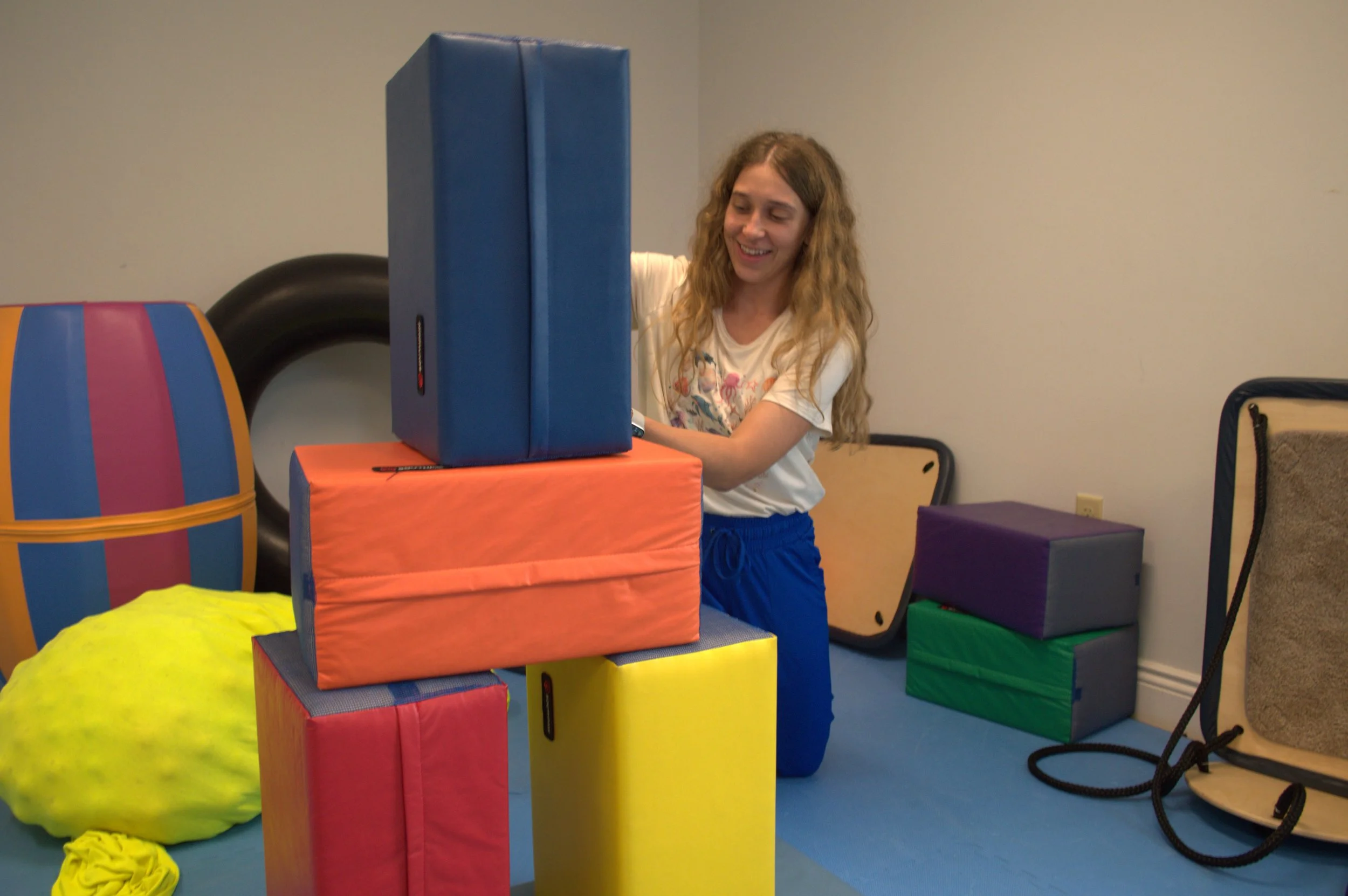
Pediatric Physical Therapy Addresses Motor Planning
We also need to figure out HOW to move
Motor planning is the ability to figure out how to move your body to complete a task. From figuring out how to stack blocks to climb into a play barrel to navigating an obstacle course, children are constantly planning, organizing, and adjusting their movements.
Through playful, movement-based activities, physical therapy helps children develop body awareness, coordination, balance, and problem-solving skills. As children experiment with new movements, they learn how to sequence steps, adapt when something doesn’t work, and approach new physical challenges with greater confidence and independence.


Above you can see the four step process that we call motor planning. First, we think of what we want to do. Then we plan out the steps to do it. Now, execute! We then make an adaptive response according to what we wanted to do and what actually happened! When we complete new tasks, we are working on our motor planning skills. Think of when you first tried to learn a new dance routine, tried a new sport, or when you first learned to drive a car. Your motor planning skills were being challenged.
Many children are challenged with motor planning during everyday tasks like putting on a shirt or applying sunscreen. Brand new tasks may take longer to learn as well. A child may have skills in one area of motor planning such as “think of an idea” but may have difficulty in another area such as “plan the steps.” In this example, you may see a child who is frustrated by tasks and appears to choose a more difficult way of doing things.
Children with motor planning challenges may also have difficulty when engaging in play with peers. When a peer introduces a new play idea, it may be challenging to engage in play if they do not know how to motor plan through this idea. This can lead to difficulties with peer engagement and regulation around peer interactions.
Motor planning challenges can be observed in a variety of ways:
·Child has difficulty with coordinating movement to climb playground equipment, jump, skip, kick a ball, pump a swing, etc
Difficulty following multistep tasks, completing daily routines, getting ready for school
Challenges imitating gross motor movements, facial expressions, imitating use of an object, engaging in follow the leader style games
Not able to recognize what they just did, identify a problem, or identify when a plan is successful
Child always uses equipment in the same ways, engages in the same play schemes repeatedly, states they do not know what to do when initiating play
Challenges with problem solving to identify a problem, coming up with different solutions to a problem, or identifying that a new strategy did or didn’t work
Therapy can challenge and help to build up a child’s motor planning abilities!
Orthotics & Adaptive Equipment
Sometimes children need extra support to move safely, comfortably, and as independently as possible. Our physical therapists work with families and medical providers to determine when orthotics, bracing, or adaptive equipment may be beneficial.
Orthotics & Bracing Consultation
We help families identify when orthotics or bracing may support their child's alignment, stability, mobility, and participation in everyday activities. When appropriate, we provide recommendations and referrals to the appropriate specialists for further assessment and fitting.

Durable Medical Equipment Evaluations
We provide evaluations to help determine the equipment that best meets a child's mobility, positioning, and participation needs. This may include wheelchairs, gait trainers, adaptive strollers, and adaptive car seats. We collaborate with families and equipment providers, including NuMotion, to facilitate equipment trials in our clinic when appropriate. Our therapists can also provide supporting documentation, including letters of medical necessity, when indicated.