Autism Spectrum Disorder
What is Autism?
We all learn and think a little differently, however, someone with autism spectrum disorder may experience more challenges due to impairments impacting function. Autism spectrum disorder (ASD) is a neurodevelopment disorder that exists on a spectrum of three levels with a wide range of symptoms, skills, and levels of disability in functioning (9). Learning and thinking abilities can range from severely challenged to gifted, with individuals needing a lot of help in daily functioning and others needing less support, respectively (2). A child with ASD often experiences difficulty in social communication and interaction as well as engagement in repetitive behaviors or patterns (9).
General Signs of Autism
ASD is identified as a constant deficiency in social communication and interaction, as well as restricted and repetitive behaviors, interests, or activities.
Children may have difficulties in being aware of people around them, initiating interactions, responding in conversation, taking turns, and sharing (5, 8). In addition, common signs include lack of eye contact, disengagement in conversation, and social withdrawal (5, 9).
Some may not have deficits in basic social interactions but have more difficulty with complex skills such as using and understanding facial expressions and body language, adjusting communication styles based on context, understanding others’ views, and showing interest in what other people enjoy (5, 8).
Other common signs exhibited by restricted or repetitive behaviors include repetitive speech about a certain topic, being overly focused on objects, hypo- or hyperreactivity to sensory input, and a desire for specific routines without interruption (5, 8). In addition, some struggle with body coordination and engagement in repetitive or unusual movements such as flapping, rocking, or twirling (5, 8).
Areas of Concern

Social

Communication
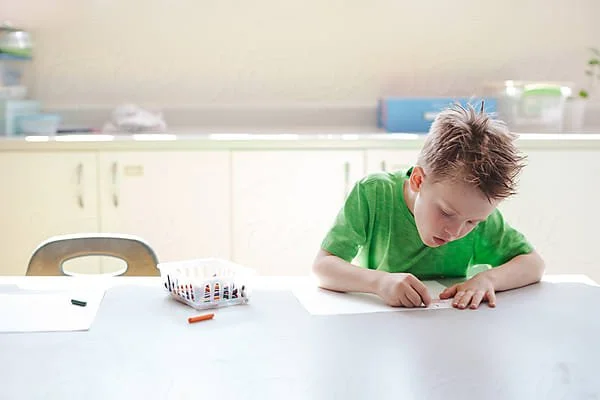
Cognitive and Behavioral
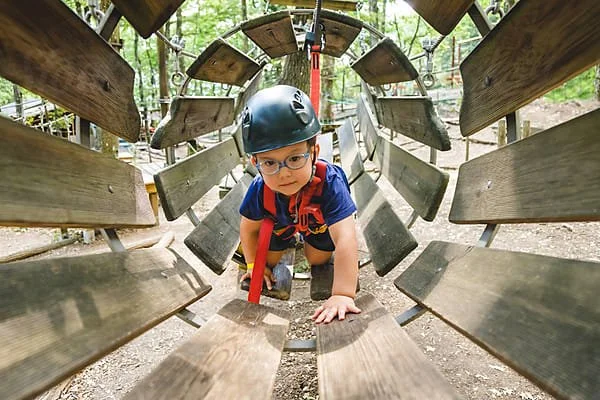
Sensory and Motor

How does ASD impact function?
An individual with ASD may have difficulties maintaining relationships, communicating, or understanding what behaviors are expected of them (1). This can impact their social reactions and overall behavior. Deficits in social language can impair function as the child may be unable to adapt their communication style with the context, engage in regular conversation, and understand the meanings of language (8).
How is ASD diagnosed?
Different assessments help to form a diagnosis for a child with ASD.
1. Developmental monitoring and screening: First, a doctor will look for developmental delays at a regular checkup (1, 6). The doctor may ask the parents questions about the child’s development or talk and play with the child to observe if the child is meeting developmental milestones (1). If milestones are missed, a specialist may provide tests for the child or further questionnaires for the parents addressing the child’s development in language, movement, thinking, behavior, and emotions (1).
Developmental monitoring takes place at regular well-child visits by primary care physicians (PCP) at 9, 18, and 30 months (1, 4). In addition, children should have a standardized autism-specific screening test at 18 and 24 months (1, 4). Screening tests are not diagnostic but help the PCP identify children at risk for ASD (4, 5).
The Modified Checklist for Autism in Toddlers Revised with Follow-Up (M-CHAT-R/F) is the most widely used screening tool for ASD for toddlers between 16 and 30 months (4). It asks parents questions regarding the child’s behavior to help determine if further evaluations need to be done (4). A score greater than 8 indicates a high risk for ASD, and the child should be referred for diagnostic assessment with a follow-up of clinician-administered questions (4, 5).
Questionnaires such as the Social Communication Questionnaire (SCQ) and Social Responsiveness Scale (SRS) are ASD screening tools used to examine a child’s behavior in various environments by measuring autistic traits on a continuum (5). Behavioral health is assessed through the Behavior Assessment System for Children, Diagnostic Interview for Social and Communication Disorders (DISCO), and the Child Behavior Checklist (5). Another screening tool based on questionnaires and observation is the Screening Tool for Autism in Toddlers and Young Children (STAT) which is administered by clinicians (5).
2. Comprehensive developmental evaluation: If the PCP recognizes an area of concern, an in-depth examination of the child’s development can be done by a trained specialist, such as a child psychiatrist, child psychologist, or developmental pediatrician to provide a clinical diagnosis (1, 9). This is done through observation, structured tests, discussion with and questionnaires for the parents (1). Tests can include motor assessments, adaptive function testing, neurological assessments, and cognitive and language testing (5, 9). A structured observation of symptoms is done with tools including the Autism Diagnostic Observation Schedule, Second Edition (ADOS-2), the Autism Diagnostic Inventory-Revised (ADI-R), and the Childhood Autism Rating Scale, Second Edition (CARS-2) to confirm a diagnosis (5).
The ADOS-2 is used by the clinician to help elicit abnormal social language and behaviors and is paired with the child’s history of social interactions and relationships, as well as functional impairment experienced from symptoms to verify if the DSM-5 criteria for ASD are met (5). A formal diagnosis can be done with the ADI-R which is a parent interview done by a clinician to report behaviors associated with ASD (5). This interview aids in forming an understanding of the child’s history and functioning. The CARS-2 is also used by a clinician to make a clinical diagnosis of ASD with the clinician completing a 15-point scale from history and observation (5). The combination of historical information and observation by a clinician trained to diagnose autism is used for a diagnostic evaluation. (5). Following the assessments, the results are used to determine if the child meets the criteria for a developmental diagnosis and if a child needs special therapeutic treatment or early intervention services (1).
Levels of Autism
-
Requires support
With mild or “high-functioning” autism, the child can communicate verbally but displays difficulty in appropriately communicating with others and engaging in back-and-forth conversation, transitioning between activities, and maintaining social relationships (4, 7). They may also prefer to stick to routines and do things their own way (4). They require minimal support for day-to-day functioning.
-
Moderate Support
A child with ASD level 2 is in the middle range for severity and support (4). The child often expresses greater difficulty with verbal and social communication as well as changing focus to move from one activity to the next (7). The child displays a very narrow interest in topics and participates in repetitive behaviors (4, 7).
-
substantial support
ASD level 3 is a more severe form of autism where children may express more extreme versions of the same behaviors in levels 1 and 2 and need substantial support to learn everyday skills. Difficulty can be seen in verbal and nonverbal expression impacting function, social interactions, and adaptations to change (7). The child may also struggle to initiate or respond to interactions with others and react to particular sensory input (4, 7).
What can therapy do to help?
The goal of occupational therapy (OT) is to reduce symptoms that interfere with daily living by catering treatment to the child (3, 6). Because each of us is a unique individual, each child with ASD also has different needs and challenges. Your child’s therapist will address the developmental aspects associated with ASD and be able to provide skill-oriented training to help with social and language skill development (3, 9).
OT intervention can also help teach skills of daily living needed to function more independently such as dressing, eating, personal hygiene, and relating with people (3, 6). Sensory approaches in therapy allow the child to engage in sensory input that might be restrictive or overwhelming in order to improve the child’s responses to the input (3). Physical approaches work to improve the child’s physical skills including fine motor and gross motor movements (3). OT intervention can help your child by supporting overall development and learning.
References:
1. Centers for Disease Control and Prevention. (2020, March 13). Screening and diagnosis of autism spectrum disorder. Centers for Disease Control and Prevention. Retrieved 2022, from https://www.cdc.gov/ncbddd/autism/screening.html
2. Centers for Disease Control and Prevention. (2020, March 25). What is autism spectrum disorder? Centers for Disease Control and Prevention. Retrieved 2022, from https://www.cdc.gov/ncbddd/autism/facts.html
3. Centers for Disease Control and Prevention. (2022, January 28). Treatment and intervention services for autism spectrum disorder. Centers for Disease Control and Prevention. Retrieved 2022, from https://www.cdc.gov/ncbddd/autism/treatment.html?msclkid=06de32b2aa1311ec8f7aa2ff5ceae7aa
4. Heather Gilmore, M. S. W. (2019, November 16). Levels of autism: Understanding the different types of ASD. Psych Central. Retrieved March 2022, from https://psychcentral.com/pro/child-therapist/2019/11/levels-of-autism-understanding-the-different-types-of-asd?msclkid=4259fffdb11011eca162d64627042085#Level-3-ASD:-Requiring-Very-Substantial-Support
5. Hyman, S. L., Levy, S. E., Myers, S. M. (2020). Identification, Evaluation, and Management of Children with Autism Spectrum Disorder. Pediatrics, 145(1), e20193447. https://doi.org/10.1542/peds.2019-3447
6. Mayo Foundation for Medical Education and Research. (2018, January 6). Autism spectrum disorder. Mayo Clinic. Retrieved 2022, from https://www.mayoclinic.org/diseases-conditions/autism-spectrum-disorder/diagnosis-treatment/drc-20352934?msclkid=cf74cee3aa1311ecb98f438eb51095d9
7. Rudy, L. J. (2022, February 25). Making sense of the three levels of autism. Verywell Health. Retrieved March 31, 2022, from https://www.verywellhealth.com/what-are-the-three-levels-of-autism-260233
8. Social skill difficulties in autism. Life Skills Resource. (n.d.). Retrieved 2022, from https://life-skills.middletownautism.com/strategies/leisure/social-skills/social-skill-difficulties-autism/
9. U.S. Department of Health and Human Services. (n.d.). Autism spectrum disorder fact sheet. National Institute of Neurological Disorders and Stroke. Retrieved February 2022, from https://www.ninds.nih.gov/Disorders/Patient-Caregiver-Education/Fact-Sheets/Autism-Spectrum-Disorder-Fact-Sheet